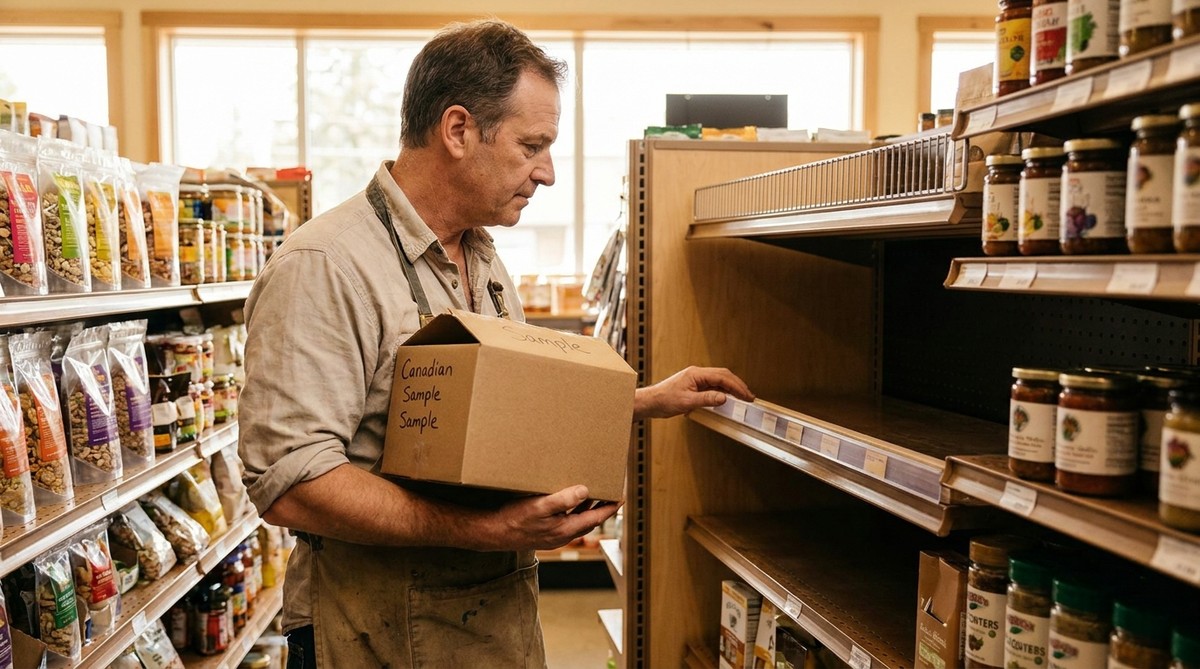
Getting your food product onto an actual grocery shelf feels like it should be the hard part, and then it isn’t, not really — the hard part is everything nobody tells you happens after the buyer says yes. We hear from a lot of food manufacturers who’ve been stuck on step one for months: cold emailing chains, getting ignored, not knowing who to even ask for, and assuming the silence means their product isn’t good enough. It usually just means they’re pitching the wrong person, at the wrong place, with no plan for what happens once the answer is yes.
Here’s how we actually did it at Heritage, and what we’d tell you to do differently if you’re just starting.
Find the right buyer, not just the right chain
“Get into Sobeys” isn’t a plan, it’s a wish, because Sobeys isn’t one decision-maker, it’s dozens of category buyers spread across regions, and the person who says yes to a snack aisle addition in Calgary isn’t the same person deciding for Edmonton. Independent grocers are simpler — usually one owner or store manager making the call — which is exactly why they’re the right place to start if you don’t have a track record yet. Get a few independents saying yes first. Sell-through data from real stores is the thing that makes a regional chain buyer take your cold email seriously instead of deleting it.
When you do reach out to a chain, find the actual category buyer, not the general info line. A LinkedIn search for “category manager” or “buyer” plus the chain’s name gets you further than any contact form ever will, and a warm introduction from another vendor already on their shelves gets you further still.
Price it so wholesale actually works
This is where most first pitches fall apart before the buyer even tastes the product. Retail price divided by two isn’t wholesale pricing, it’s a guess, and if you haven’t actually run your true cost — ingredients, packaging, labor, the freight to get it to their distribution center or dock — you don’t know if that “yes” makes you money or quietly loses it. Buyers expect a line sheet: wholesale price, suggested retail, case pack size, minimum order quantity, lead time. Show up without one and you’ve told them you’re not ready, even if your product is.
The pitch itself is short
Once you’ve got the right person and the right numbers, the actual pitch is the easy part — a short line sheet, a couple of samples, and a clear answer to “why should this be on my shelf instead of what’s already there.” Buyers aren’t looking for your whole brand story on the first call. They’re looking for a clean answer to whether this sells, at what margin, and whether you can actually keep the shelf stocked without falling apart the first time an order is bigger than expected.
Say yes carefully — not every shelf is worth it
This is the part almost nobody warns you about, and it’s the one that actually cost us money. A few years into Heritage, we were shipping product to certain retail locations just to say we were on more shelves — treating every “yes” as a win regardless of what it actually took to fill it. I finally sat down and ran the real math on those shipped orders against what local delivery was bringing in, and the shipped accounts were clearing under 4% margin once freight, packaging, and breakage were factored in, against 45–52% on anything we delivered ourselves. Revenue looked great on paper. Profit on those specific accounts was basically nothing.
We stopped shipping those accounts immediately, and it changed how we said yes to any new placement after that. A shelf isn’t automatically worth it just because it’s a shelf. Before you say yes to a chain that requires shipping, distributor fees, or slotting costs, run the actual margin on that specific deal — not your average margin across everything else you sell.
Getting on the shelf is the beginning, not the finish line
The buyers who said yes to us weren’t the ones who kept us on the shelf long-term — reordering did that, and reordering doesn’t happen on its own. It happens because someone stays in front of that buyer with a reason to reorder before the shelf goes empty, which is a completely different skill than landing the first yes. We wrote about the actual cadence and message timing we use for that in The Exact Follow-Up System We Use to Keep 60+ Grocery Stores Ordering Regularly, and the full breakdown of what to track per buyer lives in Grocery Buyer CRM for Food Manufacturers.
That relationship-management piece — knowing every buyer’s contact info, order history, and reorder window without digging through old emails — is the exact gap Caska was built to close, because it’s the same gap we had at Heritage before we built the tooling ourselves. Plans start at $39/month CAD with a 7-day free trial if you’re about to land your first few accounts and want a system in place before the chaos starts, not after.
See how Caska tracks buyer relationships →
Frequently Asked Questions
How do I find the right buyer at a grocery chain? Search for the category manager or buyer by name rather than using a general contact form — LinkedIn works well for this. A warm introduction from another vendor already on the chain’s shelves is even more effective than a cold email.
Should I start with independent stores or big chains? Independents first. A single owner or store manager can say yes without the layers of a regional chain, and the sell-through data you build with a few independent accounts is what makes a chain buyer take your pitch seriously.
How do I price my product for wholesale? Don’t just cut your retail price in half. Calculate your true cost — ingredients, packaging, labor, freight to their distribution center — then build a line sheet with wholesale price, suggested retail, case pack size, minimum order quantity, and lead time.
Is every grocery placement worth saying yes to? No. Shipping, distributor fees, and slotting costs can quietly wipe out the margin on a specific account even while your overall revenue looks like it’s growing. Run the real margin on each deal before you commit to it.