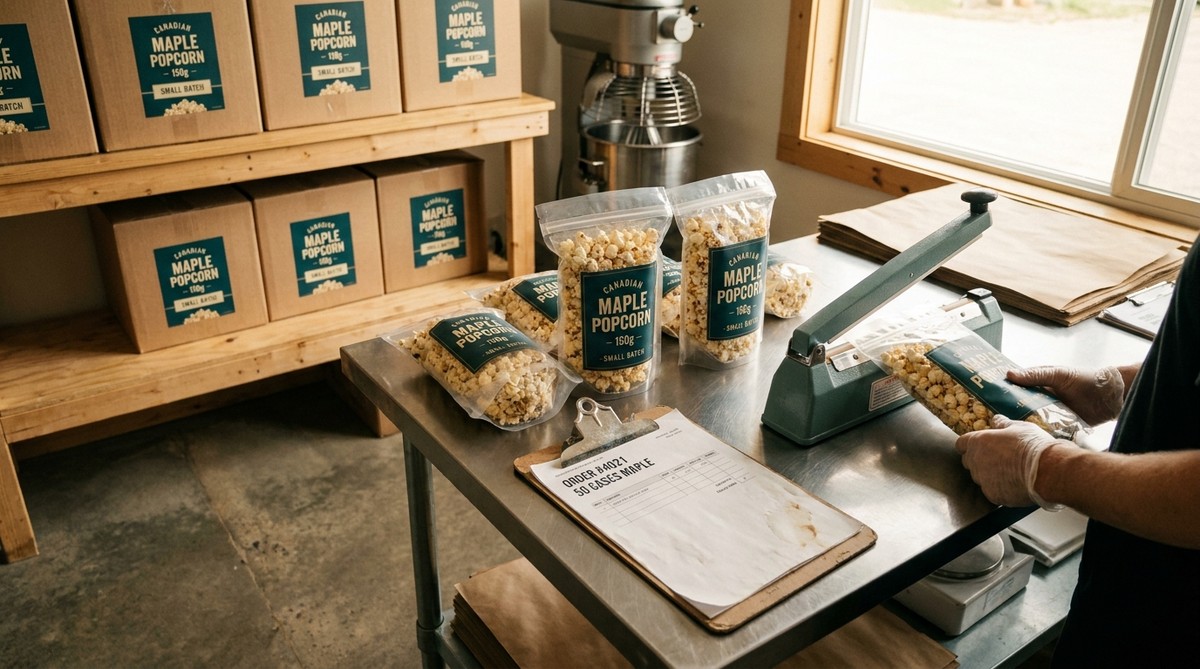
Made-to-order production means you make the product after a customer places an order, so nothing gets produced until someone has actually asked for it. Batch production means you make a set quantity ahead of demand, on a schedule, and fill orders out of the finished stock sitting on your shelves. The practical difference between the two is where your risk sits, since made-to-order puts it in your ingredient inventory and your turnaround time, while batch puts it in your finished goods and how long they can sit before they stop being sellable.
Neither model is better in general. Made-to-order tends to suit products where freshness is part of the pitch, order volume is steady enough to plan around, and buyers will wait a few days. Batch production tends to suit shelf-stable products, high-volume SKUs, and channels where the buyer expects you to ship the same day. Most small food manufacturers end up running some mix of the two, whether they’ve decided to or not, and the useful question is which products and which channels belong in each.
What is made-to-order production?
Made-to-order production is a model where every production run is triggered by a confirmed customer order, and the quantity produced matches what was ordered. You hold ingredients and packaging, not finished goods, and the product is made fresh for the person or store buying it.
Heritage Confections, the popcorn company behind Caska, runs this way. Every bag is made fresh for the order, which means a grocery store in Alberta that orders on Monday gets popcorn that was popped for that order, not product that’s been sitting in a warehouse since the spring. That freshness is a real selling point with buyers and customers, and it’s a big part of how Heritage talks about its product.
What is batch production?
Batch production is a model where you produce a planned quantity of a product in one run, usually on a regular schedule, and store the finished units until they’re sold. Orders get filled from existing stock instead of kicking off a new run.
The appeal is efficiency. Setup, cleanup, and labour are spread across more units, you can buy ingredients in bigger and cheaper lots, and when an order comes in you can pick, pack, and ship right away. The trade-off is that you’re betting on demand before it shows up, and whatever doesn’t sell still costs you the ingredients, packaging, and labour that went into it.
Freshness vs. efficiency: what are you trading?
You’re trading product freshness and low finished-goods waste (made-to-order) against lower cost per unit and faster fulfillment (batch). That’s the whole decision, really, and everything else falls out of which side of it matters more for a given product.
Made-to-order usually costs more per unit, since you’re running smaller and more frequent production and repeating setup and cleanup each time. But you almost never throw out finished product, and you can honestly tell a buyer it was made for them. Batch runs cheaper per unit, but it adds a cost that doesn’t show up on the production sheet, which is the product that expires, goes stale, or gets marked down before it sells. For a product with a long shelf life, that cost is small. For anything where quality drops off fast, it can eat the efficiency savings you were counting on without ever showing up as a line item.
How does each model change your inventory?
Made-to-order shifts your inventory risk onto ingredients and packaging, while batch production shifts it onto finished goods. You still have to track inventory either way, you’re just watching different shelves.
People tend to underestimate this about made-to-order, because when you’re not sitting on finished product it’s easy to assume inventory isn’t much of a concern, but every order you confirm is a promise that you’ll have the inputs to make it. Heritage learned that one the expensive way. Three days before a big delivery, we realized we were completely out of sugar, our supplier needed a week and a half, and the order couldn’t move, so I drove to Walmart and bought cane sugar at full retail price to get it made. That run wiped out nearly all the profit on the order. In a made-to-order business, an empty ingredient bin is the same as an empty shelf, you just find out about it later, usually when there’s no time left to fix it. If that sounds familiar, How to Manage Inventory So You Never Run Out of Ingredients Again walks through setting reorder points so the warning comes before the emergency.
Batch production flips that around. Your ingredient buying is lumpier and more predictable, since you know when the next run is, but you’re now managing finished-goods stock across SKUs, rotating it so the oldest sells first, and watching best-before dates. What usually goes wrong there is having too much of the wrong thing, rather than running out.
Which sales channels favour which model?
Channels that allow a lead time and order in predictable patterns suit made-to-order, and channels that expect same-day shipping or unpredictable volume suit batch.
- Local grocery and specialty retail often works well made-to-order. Buyers reorder on a rhythm, delivery is local, and a few days of turnaround is normal. This is where Heritage sells most of its product.
- Direct-to-consumer e-commerce leans toward batch, since online shoppers expect orders to ship within a day or two and order volume swings week to week.
- Farmers’ markets and events are almost always batch. You produce ahead for the day and sell what you brought.
- Large distributor or chain accounts often push you toward batch, or at least toward a buffer of finished stock, because order quantities get big and delivery windows get tight.
Can you run a hybrid of made-to-order and batch?
Yes, and most small food manufacturers do. The common version is to batch-produce your steady, high-volume SKUs and keep made-to-order for fresh-sensitive products, custom orders, or smaller accounts.
A hybrid works when you decide on purpose which product and which channel goes where, instead of letting it happen by default, and these four habits make that easier:
- Decide per SKU, not per business. Your best seller might justify batch runs while a seasonal flavour stays made-to-order.
- Track ingredient inventory against both open orders and scheduled batches, so a big made-to-order week doesn’t eat the inputs you need for Thursday’s run.
- Keep a small finished-goods buffer on made-to-order products that get urgent reorders, so one rushed request doesn’t blow up your production schedule.
- Look at margin by channel. A batch product going to a shipped account and a made-to-order product going to a local store can have very different profit, even at the same price. Simple Ways to Increase Your Profit Margins covers how to see that clearly.
Caska supports both models, and a mix of the two, so orders, ingredient inventory, and scheduled runs all live in the same place. What Is Batch Production Tracking? goes deeper on the batch side if that’s where most of your volume is.
Frequently Asked Questions
What is the difference between made-to-order and batch production? Made-to-order production starts only after a customer order is confirmed and produces exactly what was ordered. Batch production makes a planned quantity ahead of demand and fills orders from stored finished goods. Made-to-order carries its risk in ingredients and lead time, and batch carries its risk in unsold finished stock.
Is made-to-order more expensive than batch production? Usually, on a per-unit basis, because smaller and more frequent runs repeat setup, cleanup, and labour. That’s often offset by lower waste, since you rarely discard finished product, and by the freshness premium some buyers will pay for.
Do I still need inventory tracking if I produce made-to-order? Yes. Made-to-order moves inventory risk onto ingredients and packaging, and every confirmed order assumes you have the inputs to make it. Without ingredient tracking and reorder points, a shortage tends to show up right before a delivery is due.
Which products are best suited to batch production? Shelf-stable products, high-volume SKUs with steady demand, and anything sold through channels that expect same-day shipping, such as e-commerce or events, tend to suit batch production best.
Can a small food business use both models at once? Yes, and many do. A common approach is batch production for steady best sellers and made-to-order for fresh-sensitive, seasonal, or custom products. Decide per product and per channel, and track ingredients against both open orders and scheduled runs.
How do I know which model is right for my product? Start with shelf life, order predictability, and what your buyers expect for turnaround. Short shelf life and patient buyers point to made-to-order. Long shelf life, unpredictable volume, or same-day expectations point to batch. Then check margin by channel before committing.